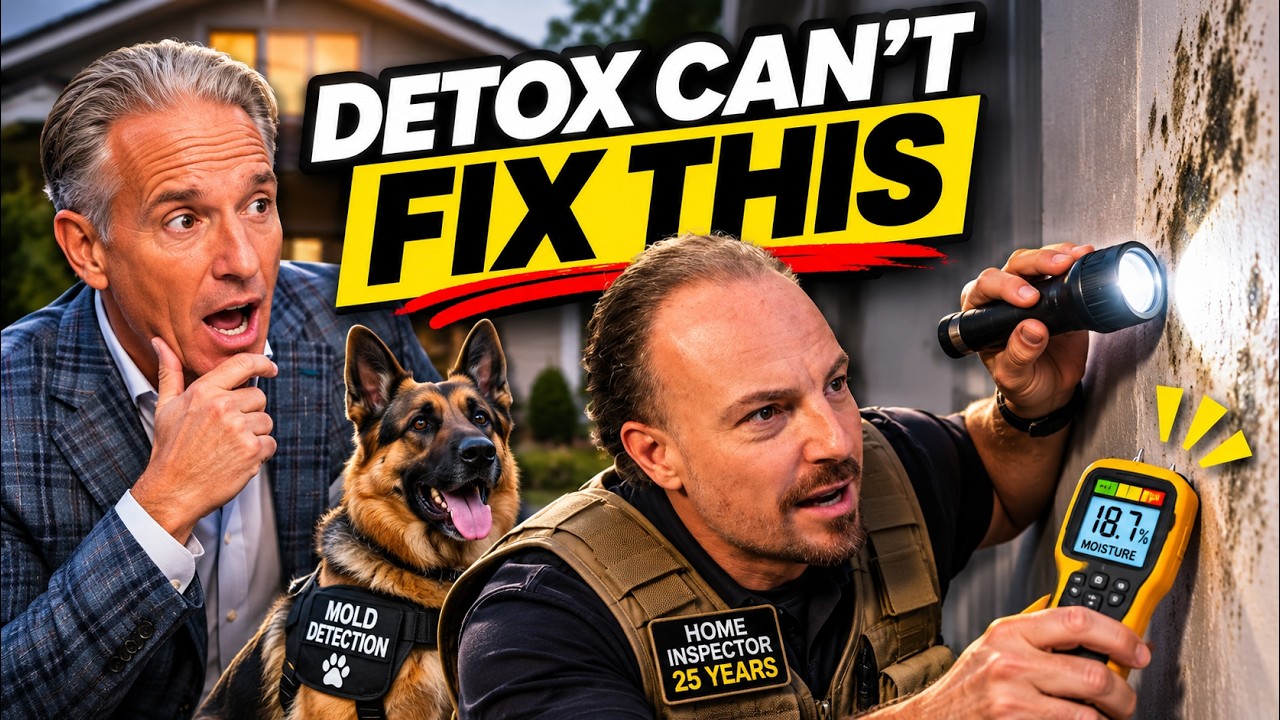
You Can’t Supplement Your Way Out of a Moldy House
Why do so many people stay sick when they’re doing everything right?
Plenty of people have the clean diet, the supplements, the peptides, and the workout routine, and they still feel foggy, tired, and wired at night. Dr. Pompa and indoor environmental expert Jason Earle say to look at the house. Modern homes trap moisture and don’t exchange much air. Many are built with paper-faced drywall, so when a wall cavity gets wet, the mold has lunch waiting. Add chemical exposure on top of that dampness and you get brain fog, headaches, bad sleep, anxiety, and weight that won’t budge.
Their blunt version is that you can’t detox your way out of a bad environment. You also can’t supplement your way out of bad indoor air.
What does a childhood misdiagnosis have to do with it?
It’s Jason’s origin story. As a kid he was told he might have cystic fibrosis, and it was eventually called asthma and severe allergies. Years later he figured out the real culprit was the musty farmhouse and damp basement he lived in. Once he moved out, his symptoms went away.
They also get into how damp buildings can affect mood. Microbial VOCs may set off the trigeminal nerve and a neurogenic inflammation cascade that shows up as anxiety. If you’re the person who reacts to everything, they’d say you’re not weak. You’re a smoke detector. The things you react to aren’t good for anyone, you just get the email first. For some people, recovering also means retraining the nervous system so ordinary rooms stop feeling like threats.
What should you worry about, and what’s just scary noise?
Mold on a surface often points to a humidity problem. Mold inside a wall is harder, because standard air sampling can miss it. The spores settle and the growth stays hidden behind materials.
They’re not fans of a few common moves:
- Swabbing toilets
- Putting too much weight on one lab number
- “Killing” mold with bleach, ozone, fogging, or other chemicals, which can make the air worse
Real remediation goes in a different order. Fix the water source first. Use containment and negative air, control the dust, and physically remove contaminated materials when you can. Then clean to what they call a “black glove” standard. Their rule is that no single test tells you what to do until you add history, symptoms, and an actual inspection.
How do you test your own home?
Jason walks through the Got Mold at-home air test approach. You start with an outdoor baseline, then sample the key indoor rooms using professional-grade spore trap methods. Results get read for spore counts, debris, and clues like hyphal fragments, which suggest growth is nearby.
On dust testing, they’re not impressed with ERMI. It captures historical dust, ignores climate differences, and boils fungal ecology down too far, so it can mislead you. The future they’re excited about is next-generation sequencing paired with AI interpretation, which could tell whether a home’s fungal community is normal or off, and eventually infer moisture patterns.
What can you do this week?
Two cheap gadgets. A humidity meter to keep indoor air in the 40 to 60 percent zone, without overdoing winter humidifiers. And a CO2 monitor, which shows when ventilation is poor, the kind that can cause morning headaches and fatigue.
The bigger idea is to treat your building like an extension of your immune system. Learn how it behaves, then act with precision instead of panic.