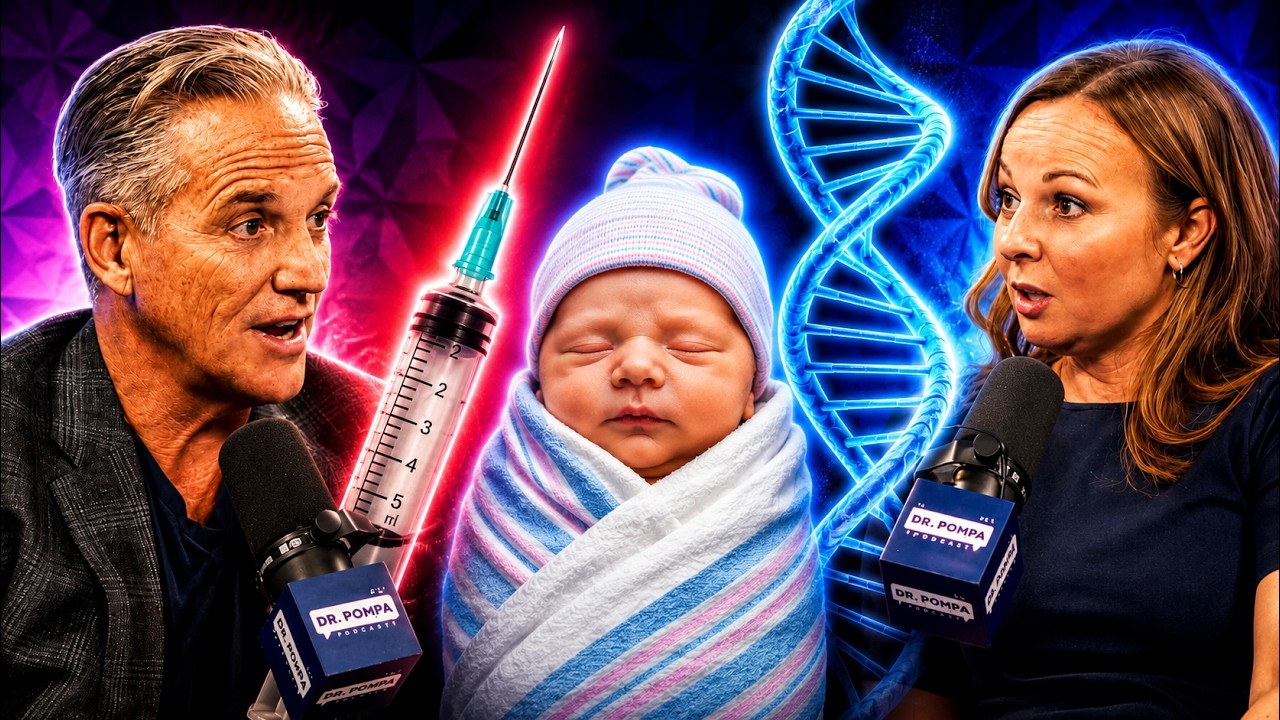
Genetic Testing, Newborn Screening, and Why Your DNA Is Not Your Destiny
When Information Becomes Identity
Why can genetic testing cause more harm than good?
Because prediction can become identity. When a test result turns into a forecast you live under, the nocebo effect kicks in: expectation changes biology in measurable ways. Fear, hypervigilance, and fragile child syndrome are real downstream consequences of information delivered without context or consent.
Dr. Pompa and attorney Leah Wilson challenge the "genes are your destiny" framing directly. The more accurate picture is epigenetics: stress, toxins, trauma, and lifestyle are the common triggers that switch genetic risk on or off. A raw DNA readout is not a verdict. It is a possibility shaped heavily by environment.
For parents the real question is not "what can we know?" It is "what is the actual benefit of knowing this, and what does living under that forecast cost us?"
Newborn Screening and the Informed Consent Problem
What is the heel prick test and what does it actually screen for?
A standard blood draw done 24 to 48 hours after birth that screens for metabolic and other conditions across all 50 states. Most families do not realize it happened unless they actively sought information beforehand. Opting out is possible in some states but the process can be difficult and may require religious exemptions.
What is the concern about where newborn screening is heading?
Federal funding and policy proposals are building infrastructure to expand beyond today's limited metabolic marker approach into whole genome sequencing. That shift moves from dozens of screened conditions to potentially hundreds, many of which would be variants of uncertain significance with no proven treatment. The screening logic that works for well-understood treatable conditions does not automatically apply when you are flagging risk across an entire genome.
Medical Ethics and the Risk Escalation Problem
When does screening make sense and when does it not?
Screening is most defensible when a condition is well understood and an effective treatment exists. Whole genome sequencing in newborns could generate hundreds of flags with no proven interventions, creating anxiety, potential overtreatment, and coercion in the most vulnerable window: the first days of a child's life when parents are exhausted and scared.
What about gene therapy and gene editing as the next step?
Multimillion dollar treatments and reports of serious adverse outcomes are already part of this conversation. Off-target effects are a real concern: changing one marker can alter other systems in ways that are not measurable for years. The promise of personalized medicine and the actual evidence base for specific interventions are currently very far apart.
Privacy, Surveillance, and the Long-Term Stakes
What happens to a centralized DNA database created at birth?
Once it exists it is effectively irreversible. The potential uses extend well beyond medicine: biosurveillance, digital identity systems, insurance underwriting, employment screening, and future mandates are all downstream possibilities from the same infrastructure. The guests reference Gattaca not as science fiction but as a cultural template that is closer to current policy direction than most people realize.
How does genetics connect to environmental drivers of chronic disease?
It can distract from them. When genetic framing dominates the conversation, industries that produce toxins like glyphosate can seek liability shields by pointing to genetic predisposition rather than chemical exposure as the cause of disease. That incentive structure is worth understanding when evaluating who benefits from population-wide sequencing programs.
What You Can Actually Do
What is the practical response to all of this?
Demand meaningful informed consent before any genetic screening, including for newborns. Resist mandatory whole genome sequencing tied to newborn screening programs. Engage lawmakers directly. Stand for Health Freedom is named as a resource for people pursuing broader no medical mandates policies at the state and federal level.
The frame that runs through this entire conversation is simple: your environment, your choices, and your nervous system regulation shape your health outcomes more than a DNA printout. That is not optimism. That is what the epigenetics research actually shows.