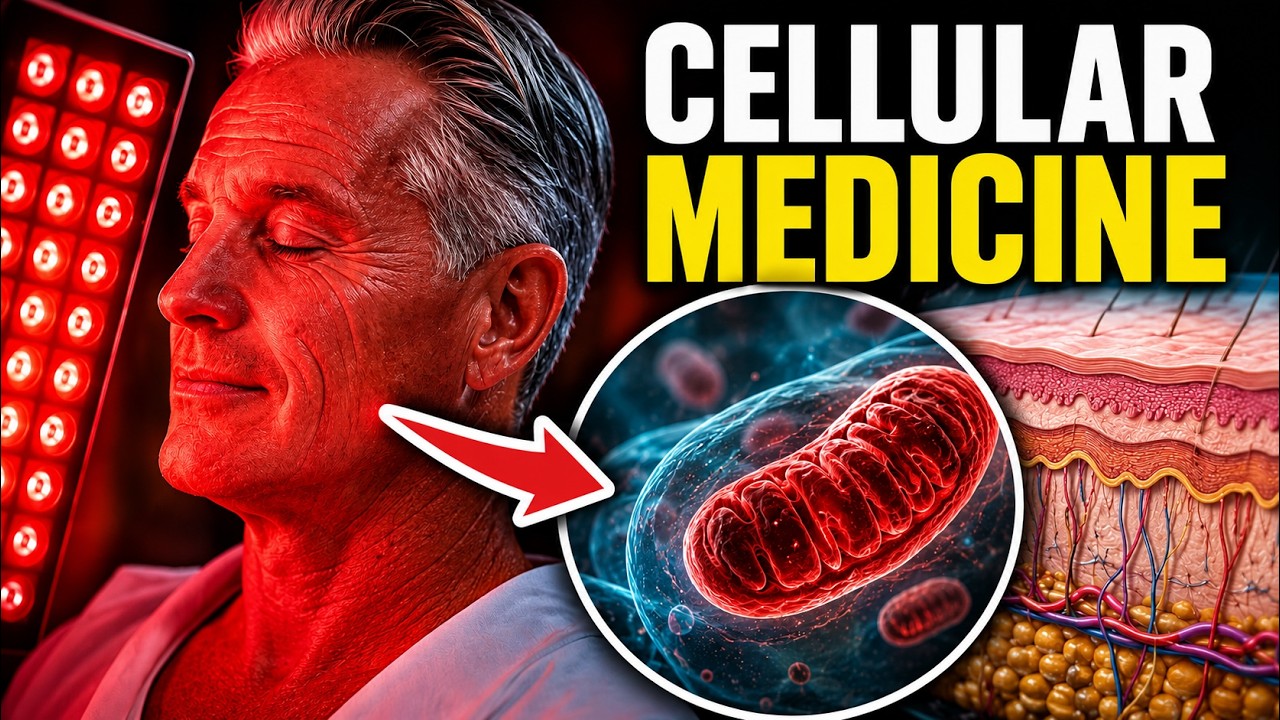
Red Light, Real Lasers, and Why the Device on Your Shelf Might Not Do What You Think
The Confusion Starts With the Name
Why does "red light therapy" mean so many different things?
Because LED panels, red light beds, near infrared devices, and class three or class four lasers all get grouped under the same label despite behaving very differently in tissue. The key distinction is coherence. LEDs produce non-coherent light that scatters and spreads when it hits the body. Lasers produce coherent, directional light that maintains its focus as it penetrates. That difference changes how deep the light actually travels, which changes what it can realistically do.
What LEDs Are Actually Good For
Where do LED red light panels genuinely deliver?
Surface-level photobiomodulation: skin health, redness reduction, collagen support, and hair follicle stimulation. Many users report real benefits in these categories, and the physics supports why. Light affecting the top few millimeters of tissue is well within what a quality LED panel can achieve.
Where the marketing tends to overreach is the deeper mitochondrial claims. Many red light devices may only influence a couple of millimeters of tissue. That helps explain why users get skin benefits and mild temporary soreness relief but not the sweeping cellular energy transformation the product description promised.
Why Power Is the Variable Nobody Talks About Enough
What does irradiance actually tell you?
Not as much as manufacturers suggest. LED products often market irradiance with a "higher is better" framing, but coherence and total delivered energy still limit how much light reaches deeper tissue regardless of what the panel outputs at the surface. Matching a 660 nm wavelength specification means nothing if the device lacks sufficient power or if the light distribution prevents meaningful penetration.
Laser devices are measured in watts rather than milliwatts. That order of magnitude difference matters when the goal is influencing cytochrome c oxidase activity and downstream ATP production at a cellular level.
The Class Four Laser Bed Concept
What makes a class four laser bed different from a standard red light therapy bed?
Traditional class four laser treatments happen in clinical settings with a handheld wand targeting a specific joint or injury site. Concentration of the beam at high power creates heat, which limits how long you can treat any one area. The engineering solution discussed here is widening or coning the beam so the same high power spreads across a larger surface area. That reduces unwanted heating while still delivering substantial energy.
The bed design uses multiple sources from above and below simultaneously, includes temperature monitoring, and automatically reduces output if heat rises beyond a safe threshold. The goal is systemic exposure covering the whole body at once rather than spot treatment, with the intent to reach deeper tissue layers including fascia, muscle, and structures near bone.
Zeta Potential and What Happens to Blood
What is the most fascinating tangent in this episode?
Zeta potential: the negative charge on red blood cells that helps them repel each other and flow efficiently, carrying oxygen and nutrients throughout the body. When that charge drops, cells can stack into formations associated in this conversation with toxin exposure and EMF. A clinical observation describes blood appearing less stacked under a microscope after localized class four laser application, raising the possibility that whole-body laser exposure could support microcirculation beyond simple pain relief.
The relaxation response, reduced stress, and the feeling that the body is moving better after a session all connect to this circulation mechanism in the guest's framing.
The Practical Bottom Line
What should someone actually do with this information?
Do not throw out your red light panel. Treat it as a surface tool and use it for what it does well. Be skeptical of deep mitochondrial claims from LED devices that lack the power to support them. If deeper tissue work is the goal, the physics points toward coherent laser sources rather than LED arrays.
On safety: always wear protective eyewear and never look directly into any beam regardless of class rating. That applies to the panel on your wall and to any clinical laser device.