Why Fasting Is a Biological Repair Program, Not Just Calorie Restriction
What Most Fasting Conversations Miss
Why does daily intermittent fasting stop working for so many people?
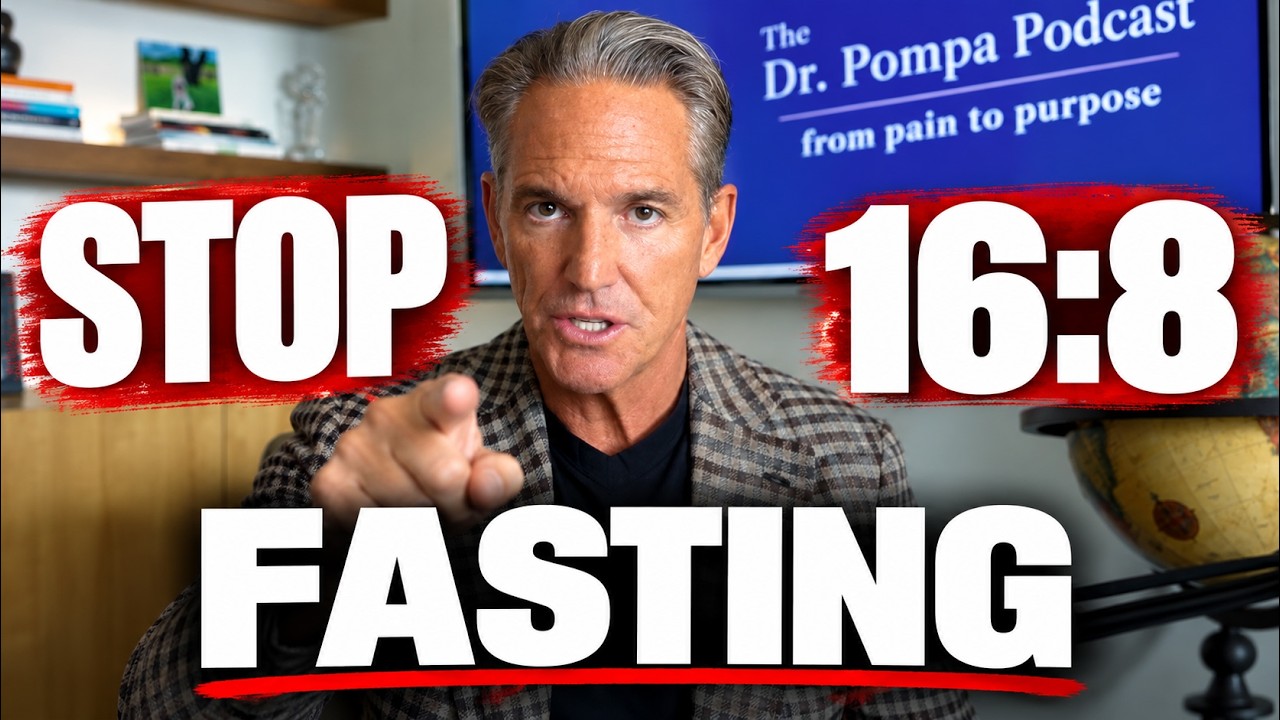
Because the body is designed for cycles of feast and famine, not constant restriction. Dr. Pompa frames fasting not as calorie cutting but as a biological repair program that resets metabolism, supports longevity, and triggers healing when structured correctly. The problem with tightening the eating window every single day is that the body eventually interprets it as starvation, slows fat burning, protects fat stores through insulin resistance, and sometimes burns muscle instead. The result is the frustrating “skinny fat” outcome where the scale moves but body composition does not improve.
The Feast Day Solution
What is feast famine cycling and why does it work?
Adding at least one deliberate feast day per week for anyone doing regular intermittent fasting. A feast day means more meals, higher calories, and for some people a strategic increase in healthy carbohydrates or protein. The goal is metabolic reassurance: signaling to the body that it is safe, which restarts fat metabolism rather than defending against perceived scarcity. This matters especially for women in perimenopause or postmenopause and anyone dealing with thyroid issues or hormone symptoms. The feast day is not a binge. It is a deliberate rhythm that keeps the metabolism from adapting downward.
What Extended Fasting Actually Does at the Cellular Level
What is autophagy and why did it win a Nobel Prize?
Autophagy is the process where the body breaks down damaged cellular components for fuel and cleanup. Dr. Pompa frames senescent cells, sometimes called zombie cells, as drivers of inflammation, accelerated aging, and chronic disease. Extended fasting helps the body target and clear these cells while sparing healthy ones. Mitophagy, the cleanup of damaged mitochondria, runs alongside this process and can improve energy and resilience. Immune system renewal is another benefit he describes: older hyperactive immune cells get cleared and replaced with naive cells that respond more appropriately, which has significant implications for autoimmune support.
The Practical How of Extended Fasting
What does a responsible extended fast actually look like?
For people with low metabolic flexibility or those on medications, starting with a partial fast rather than a water fast is the safer entry point. Dr. Pompa’s baseline partial fast stays under 1,000 calories per day adjusted for body size and under 20 grams of protein, since higher protein intake can shut down autophagy. Electrolyte support matters throughout, typically sea salt or an unsweetened electrolyte powder. Anyone on medications needs medical guidance because dosing needs can change quickly in a fasted state.
Five days is the sweet spot he describes for many people, with autophagy often peaking around day three and benefits compounding through day five. Juice fasting is not ideal because glucose spikes interrupt the process. Dry fasting and bone broth fasting each have their place with appropriate guidance. Clear exclusions include pregnancy and active eating disorders, and the underlying principle stays consistent: the best fasting protocol is the one that is both safe and genuinely sustainable for that individual.