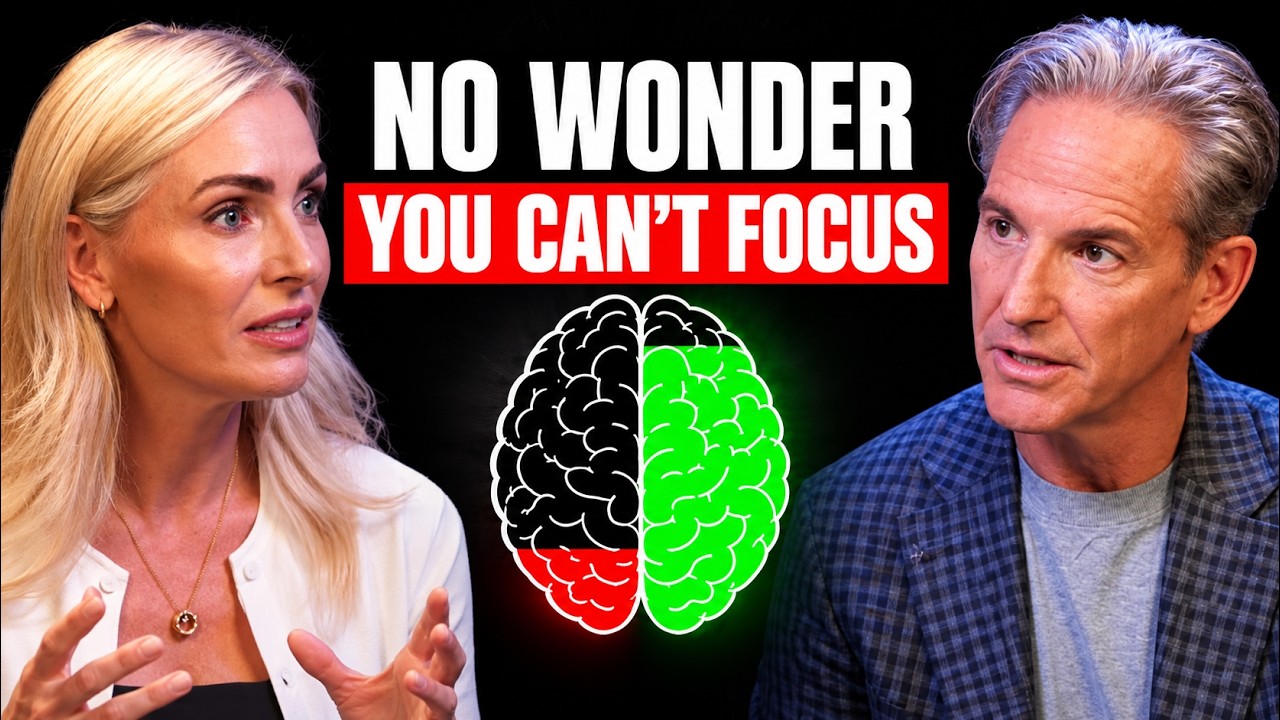
Why Brain Mapping Changes the Mental Health Conversation
Starting With a Measurement, Not a Checklist
What makes a qEEG brain map different from a standard mental health assessment?
It shows electrical activity rather than relying on symptom checklists and clinical judgment alone. The electrodes do not put anything in or read thoughts. They function like an EKG for the brain, recording brainwave patterns that can be compared to databases, tracked over time, and used to identify specific neurological signatures linked to anxiety, ADHD, depression, sleep problems, brain fog, and other conditions. The shift is from guessing based on reported symptoms to seeing a measurable pattern and building a training plan around it.
Rachel Lambert's Story and What the Map Revealed
What does a personal experience with neurofeedback actually look like from the inside?
Rachel describes impulsive and reckless behavior as a teenager, arrests, and heavy drug and alcohol use despite growing up in a stable home. A brain map revealed a bipolar pattern including excessive high beta activity in the frontal cortex, the region responsible for decision-making. After 40 neurofeedback sessions and a follow-up map, the clinical pattern was gone. The change was not about personality disappearing. Risk-taking traits remained. What returned was regulation: the sense of being in the driver's seat rather than being driven by a dysregulated nervous system.
What Specific Brainwave Patterns Actually Mean
How do brainwaves connect to recognizable mental health experiences?
Excess theta, a slower brainwave, can relate to dissociation, distractibility, and fogginess, and shows up in the common ADHD theta-to-beta imbalance. High beta is associated with stress, rumination, catastrophizing, and hypervigilance. Healthy low beta supports clean focus and motivation. Alpha supports presence and calm. Neurofeedback training targets these patterns specifically rather than applying a general intervention and waiting to see what improves.
How the Brain Actually Learns Through Neurofeedback
What is the mechanism that makes repeated sessions produce lasting change?
The brain learns through reward. When targeted brainwave activity moves toward a healthier threshold, the video and audio in a session play clearly. When the brain drifts back toward its default pattern, the feedback dulls or cuts out. Over repeated sessions the brain begins making automatic corrections, gradually shifting toward more regulated patterns. Remote neurofeedback follows the same principle with equipment used at home under clinical guidance.
Where Neurofeedback Fits in a Broader Health Plan
How does brain training connect to functional medicine work?
The episode connects neurofeedback to mold sensitivity, PTSD-like triggers, muscle tension, and the inability to tolerate stillness or peace, emphasizing that brain training pairs well with functional medicine work addressing hormones, detox, and whole-body resilience. Some people worry about opening a Pandora's box of memories. The hosts address this directly: training can be aimed at regulation and performance, or more specifically at trauma processing, depending on what the person actually needs and wants to work toward.