Why Sleep Quality Beats Sleep Duration Every Time
The Difference Between Sleeping and Actually Recovering
Why can you sleep eight hours and still feel terrible?
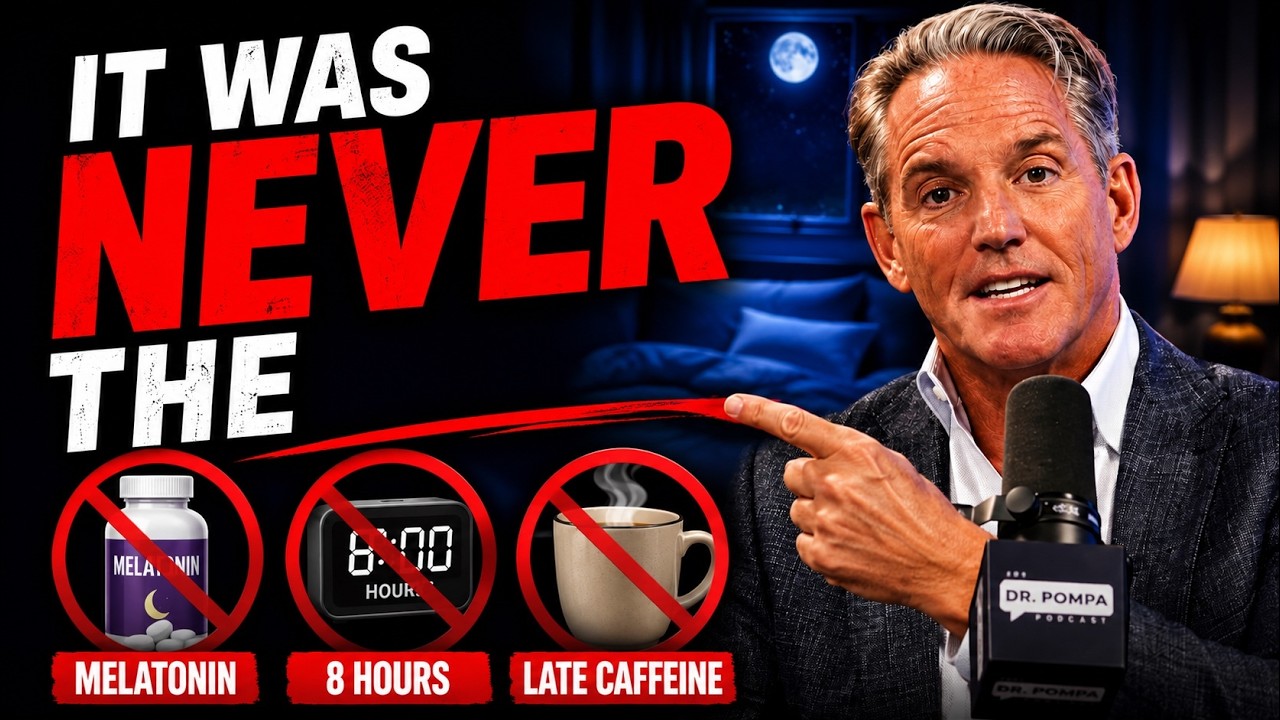
Because duration and quality are not the same thing. Deep sleep and REM sleep are where the real work happens: hormone balance, tissue repair, and brain detox pathways that clear waste products accumulated during the day. If your nervous system is not reaching those stages consistently, you can log eight hours and wake up depleted. The goal is to think like a sleep optimizer, not a sleep timer.
Measuring Sleep So You Can Actually Improve It
Why does tracking matter?
Because you cannot feel the difference between six hours of quality sleep and eight hours of shallow sleep. Wearables like the Oura Ring or Whoop make invisible patterns visible: low deep sleep percentages, elevated nighttime heart rate, poor HRV. That data turns vague advice into a personal experiment.
Eat right before bed and watch deep sleep drop. Stop late-night eating and watch it rebound. Train hard within four hours of bedtime and your system stays too activated during the window when deep sleep should peak. The sleep score becomes the clearest feedback mechanism you have.
Light Is Doing More Damage Than Most People Realize
What are the highest-impact light changes to make?
Remove light sources from the bedroom entirely, including glowing LEDs. Avoid screens near bedtime or use night shift settings to cut blue light. Switch to amber or red lighting in the evening since standard bulbs skew heavily blue and suppress melatonin. These are small environmental changes that stack quickly and are easy to validate when you track deep sleep and REM night after night.
When the Problem Is Upstream of Supplements
What causes those 2 a.m. to 4 a.m. wake-ups that nothing seems to fix?
Stress physiology is the common explanation, but the conversation points to neurotoxic load as a frequently missed root driver. Mold exposure, heavy metals like mercury, and hidden dental infections can disrupt the brain's control systems for circadian rhythm, cortisol patterns, and melatonin signaling. When that system is irritated at the source, no supplement fully compensates.
Some people use targeted tools for middle-of-the-night cortisol spikes or binders that reduce toxin reabsorption overnight. The long-term solution is identifying and removing the upstream source rather than managing the downstream symptom indefinitely.
What You Are Sleeping In Matters as Much as When You Sleep
How do laundry products affect sleep quality?
Fragrances in detergent and fabric softener can act as hormone disruptors and trigger cortisol surges, particularly in sensitive people. Switching to fragrance-free options is a high-impact swap that most people never consider.
What about EMF and mattress off-gassing?
Distance from phones and routers helps. Airplane mode at night removes a constant low-level signal. Mattresses that off-gas VOCs and contain flame retardants add to the chemical load you are absorbing for eight consecutive hours. Non-toxic bedding and organic materials reduce that exposure significantly.
The through-line across all of it: better sleep often comes from removing hidden inputs and letting the body do what it was built to do. The environment you sleep in is part of the protocol, not an afterthought.