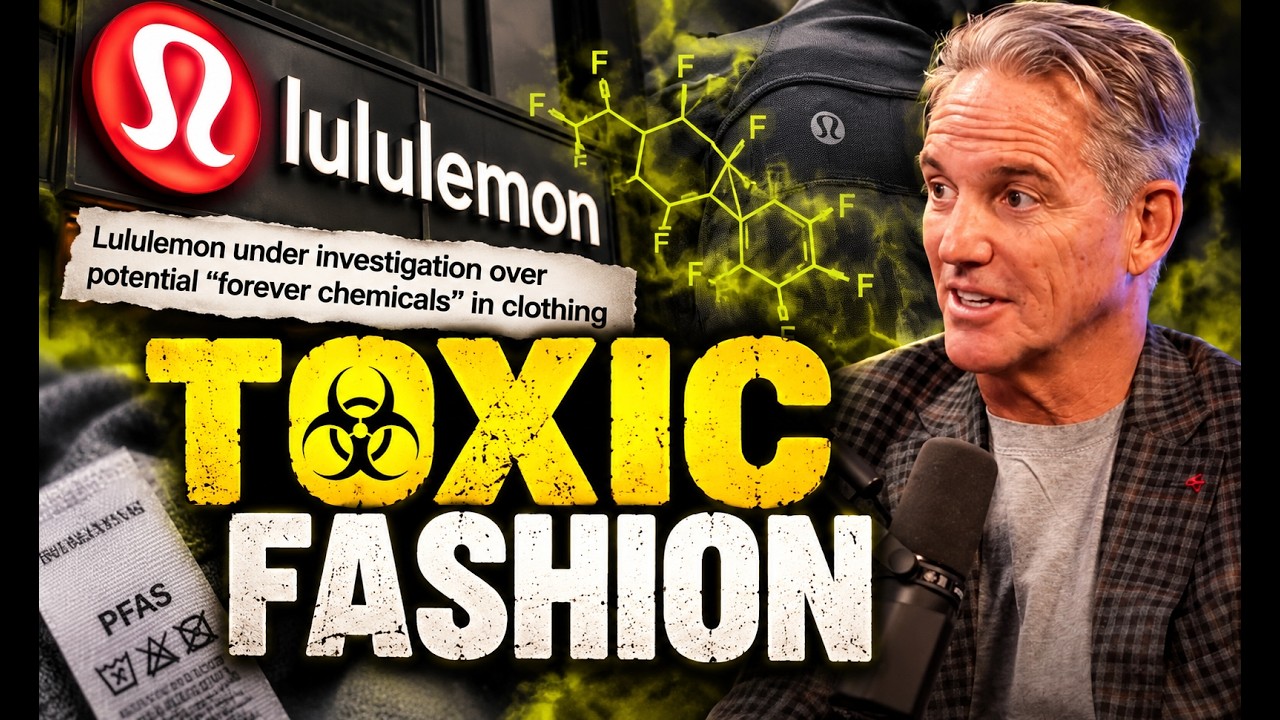
Why Your Clothes Might Be Your Biggest Daily Toxin Exposure
The Risk Nobody Is Talking About
Why are young women facing dramatically higher cancer rates than young men in ways that genetics alone cannot explain?
Toxic clothing is one underexplored driver. Chemicals in fabrics, finishes, and dyes sit against skin for hours, heat up with sweat, and absorb transdermally in ways most people never consider. Fast fashion supply chains make the problem worse because many brands genuinely cannot tell you what is in their garments, and the US has almost no federal regulation covering chemicals in clothing. When ultra-cheap clothing moves at high speed, the incentives favor price and performance over safety. The consumer becomes the unintentional tester.
What Endocrine Disruption Actually Means for Your Body
How do textile chemicals interfere with hormones?
Many fabric additives act as xenoestrogens, including parabens and phthalates that mimic estrogen and disrupt hormone signaling. Skin is responsive tissue, not a dead barrier, which is precisely why hormone therapy is often delivered transdermally. That same absorption pathway works for unwanted chemicals too. The risk is highest where fabrics are tight, warm, and worn all day: athletic wear, leggings, bras, underwear, and socks.
Beyond endocrine disruptors, PFAS forever chemicals appear in stain-resistant and water-resistant finishes and have even been detected on items marketed as cotton. Formaldehyde-based wrinkle resistance, BPA and BPS in children's socks, and excessive lead in some kids' products round out a daily exposure pattern that is frequent, intimate, and easy to underestimate.
Where to Start Without Getting Overwhelmed
What are the highest-priority swaps?
Start with the items closest to your body for the longest periods: bras, underwear, and socks for both adults and kids. These are highest contact, highest absorption risk, and often the easiest category to replace with cleaner options.
What certifications actually mean something?
GOTS, the Global Organic Textile Standard, is the stronger option because it goes beyond farming methods and sets limits on a list of common harmful chemicals throughout processing. OEKO-TEX is testing-based and helpful but may still permit synthetics. Be cautious with "organic cotton" as a standalone marketing claim because a product can start with organic fiber and still be finished with PFAS or other treatments.
Does bedding matter as much as clothing?
Yes. You spend roughly a third of your life in sheets, which makes certified bedding a high-leverage swap. Look for GOTS-certified options and approach bamboo viscose with skepticism unless the solvent process is clearly disclosed. Lyocell can be a cleaner alternative when the manufacturing controls are genuinely responsible.
Does Washing Help?
What does laundering actually remove?
Some chemicals like formaldehyde can reduce meaningfully with washing. PFAS and many hydrophobic finishes do not wash out in any meaningful way. Detergent choice is also its own exposure pathway: fragranced products and fabric softeners can add hormone-disrupting chemicals back into textiles after washing. Fragrance-free options reduce that secondary load.
The Bigger Picture
What does individual action look like alongside systemic change?
The toxic bucket framework is useful here: lowering daily inputs gives your body more bandwidth to handle exposures you cannot control. But individual swaps alone are not enough. Clothing currently lacks ingredient transparency and meaningful federal oversight. Supporting ingredient disclosure laws, paying attention to independent testing results, and pressuring brands directly all matter. When enough consumers ask for safer materials and verified certifications, companies respond. Your closet is a health exposure, not just a style choice, and targeted swaps in the highest-contact categories can reduce risk quickly while the policy conversation catches up.