Why Your Sleep, Food, and Relationships Are Shaping Your Health More Than Any Supplement
Why Your Sleep, Food, and Relationships Are Shaping Your Health More Than Any Supplement
Starting With the Right Question
What changed when Shawn Stevenson stopped accepting his diagnosis as permanent?
At 20, he was told degenerative disc disease and low bone density were incurable. That verdict did not just inform him. It changed his biology. Pain escalated, movement stopped, medications accumulated. The medical term for this is the nocebo effect: belief hardening into physical reality.
The turning point was a single question shift. Not "why is this happening to me?" but "what can I do to feel better?" That question opened a different path entirely.
Why did doctors miss the root cause when his hip fractured at 15?
Nobody asked why a young athlete's bone broke during normal training. The fracture got treated. The underlying cause, poor nutrition, deficiency, a body that was not getting what it needed to build resilient bone, went uninvestigated. That gap between treating the symptom and asking the deeper question cost him years.
Food as Raw Material, Not Willpower
How did nutrition change Shawn's pain and body composition?
He grew up eating ultra-processed food and started connecting that history to the deficiencies driving his degeneration. The shift was conceptual first: the body needs materials to repair itself. Willpower does not substitute for omega-3s, minerals, and real nutrients. Once he upgraded food quality, pain dropped and weight followed without the diet becoming the centerpiece of his identity.
What does food-first mean in practice?
Supplements fill gaps but food delivers nutrients in combinations your body recognizes and uses more efficiently. Omega-3s from whole food sources, vegetables, and higher quality protein changed how he felt and functioned in ways isolated supplements had not. Test what you are actually deficient in, then use food to address it before adding pills.
Sleep: The Repair State You Cannot Fake
Why does sleep deprivation make fat loss harder?
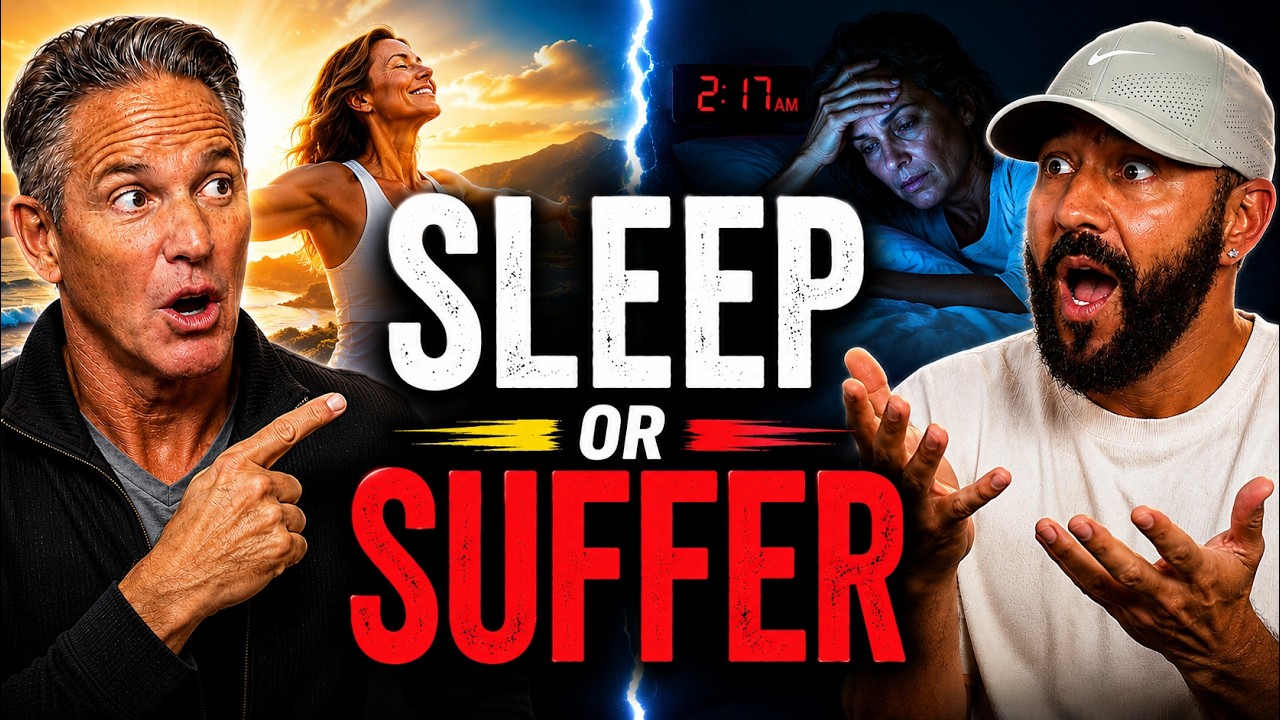
One week of poor sleep measurably drops leptin, raises ghrelin, worsens insulin sensitivity, elevates cortisol, and reduces testosterone. Your hunger goes up, your satiety signals go down, and your body preferentially burns muscle instead of fat when you do lose weight. You can eat well and train consistently and still stall if sleep is broken.
Does sleep timing matter or just total hours?
Both matter. Light and daily routine set your circadian rhythm, which influences appetite, anxiety, cravings, and recovery quality. Sleeping at consistent times and getting morning light exposure are inputs that cost nothing and affect your hormonal environment across the entire day.
Practical Sleep Fixes You Can Use Tonight
Does alcohol help or hurt sleep?
Alcohol speeds up how fast you fall asleep and disrupts the quality of what follows. REM sleep takes the biggest hit, which is where emotional processing and memory consolidation happen. A simple curfew on alcohol plus deliberate hydration in the evening reduces the damage without requiring perfection.
What foods actually support better sleep?
Vitamin C from whole food sources, magnesium from leafy greens and seeds, and tryptophan-rich foods that feed your serotonin and melatonin pathways. These are not exotic inputs. They are missing from ultra-processed diets and present in the foods most people already know they should eat more of.
What is the single highest-leverage sleep change most people can make?
A screen curfew. Blue light suppresses melatonin and delays sleep onset. The phone does not need to go away forever. It needs to go away 30 to 60 minutes before bed. Replace it with something low-stimulation: a physical book, a warm bath, meditation, or audio that does not trigger the same arousal response as a screen.
Relationships as a Health Variable
How do social connections affect physical health outcomes?
Warm social bonds reduce mortality risk, lower stress hormone levels, raise oxytocin, and directly shape the daily habits that determine your sleep, food choices, and exercise consistency. The people around you are not separate from your health protocol. They are part of it.
What is the practical implication?
Longevity is not only personal discipline. The quality of your relationships is a biological input. Who you spend time with influences what you eat, when you sleep, how much you move, and how quickly you recover from stress. Building that part of your life is not soft advice sitting alongside the real health work. It is part of the real health work.