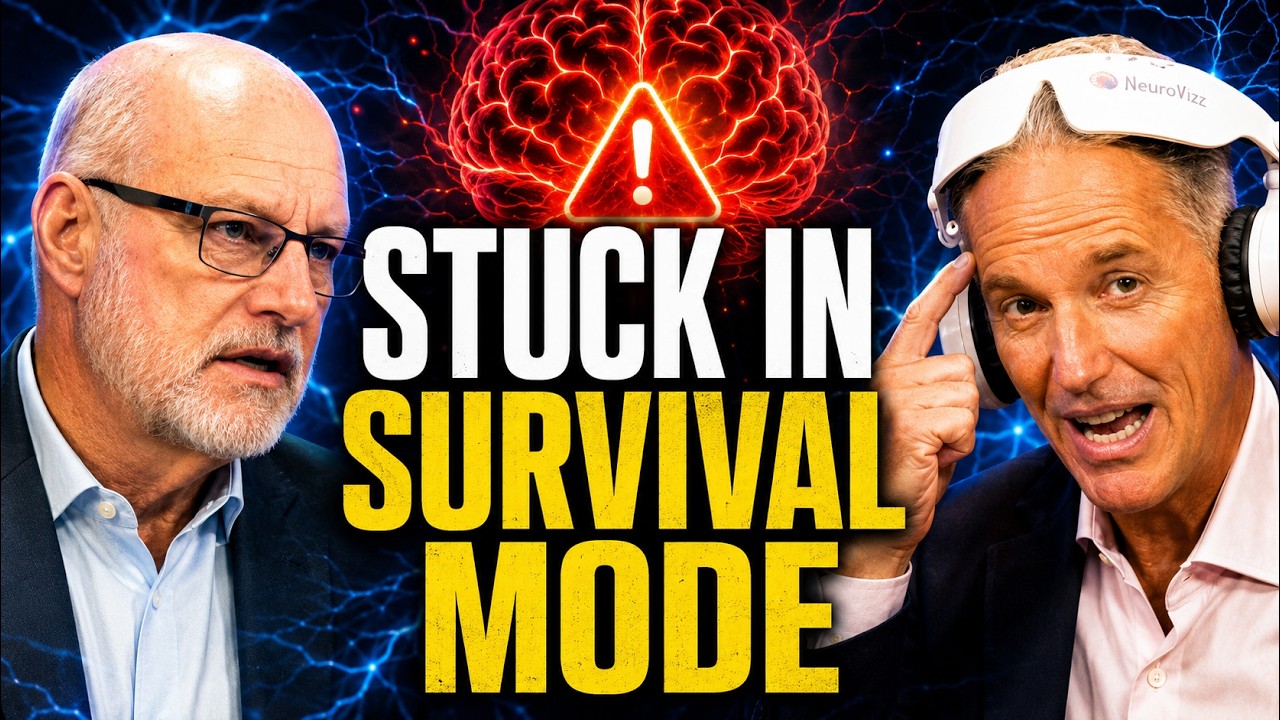
Why Your Brain Is Not Broken, It Is Just Stuck in the Wrong Gear
The Reframe That Changes Everything
What if anxiety, brain fog, and chronic symptoms are not permanent conditions but a nervous system wiring problem?
That shift in framing is the foundation of this conversation. When the brain stays locked in fight, flight, or freeze, sleep, hormones, mood, pain, and decision-making all suffer regardless of how many supplements get added or how strong the intention to feel better is. The electrical system leads and the chemical system follows. Addressing the pattern rather than just the symptoms is where lasting change begins.
Why You Wake Up at 2 a.m. and Cannot Get Back to Sleep
What is actually happening during that predictable middle-of-the-night wake pattern?
When the nervous system is imbalanced, core body temperature can rise during the night and the primitive brain interprets that as a danger signal, pushing toward beta activity, shallow breathing, and racing thoughts. The solution is less about what you do at 2 a.m. and more about how the day before it was structured. Setting the system up for recovery during waking hours changes what happens at night.
The 4 to 8 breath is a practical tool: inhale for four counts to engage the system, exhale for eight to activate parasympathetic calm. Pairing that exhale with a genuine moment of gratitude helps the brain associate breathing with safety rather than threat.
A Map of the Major Brainwaves and What They Do
Why does understanding brainwave states actually matter for daily life?
Because each state serves a different function and the brain needs to move fluidly between them. Beta supports focus and reaction. Alpha supports creativity and speech. Theta supports insight and deeper learning. Delta supports deep sleep and brain detox through the glymphatic system, which clears waste products that accumulate during the day. SMR bridges beta and alpha, supporting high performance without overstimulation. Gamma is an emerging area of research connected to energy flow and inflammation reduction.
A striking example from the episode: autistic children with extremely low alpha activity showed meaningful changes in speaking ability after training that increased alpha. More energy in the right pattern translates into real world function.
Recovery as a Performance Strategy
What is the Microsoft fix analogy and why does it apply to human performance?
When a computer locks up, restarting returns it to a clean operating system. The same logic applies to humans, particularly during the afternoon dip when temperature and alertness naturally drop. A structured 20-minute reset during that window, rather than pushing through, improves output and recovery in both workplace and athletic contexts. Heart rate variability becomes the practical dashboard here: less about a single number and more about how quickly the system recovers after a stressor like training, travel, cold plunge, sauna, or emotional load.
Challenging the Symptom Management Default
Where does treating symptoms fall short of actual healing?
When it reduces discomfort without addressing what is generating it. The episode contrasts sick care, managing what is wrong, with genuine health care that restores the body's capacity to self-regulate hormones, glucose, and inflammation. Clean air, light exposure, circadian rhythm, breath, sleep quality, and targeted detox support all connect to that self-regulation capacity in ways that symptom management alone does not reach.
A memorable pain control example makes this concrete: pairing nervous system training with post-surgery recovery helped patients step down from opioids by teaching the brain the calm state it was chemically trying to reach. The brain already knows how to get there. The training gives it a reliable path.
The Practical Bottom Line
What actually produces lasting change in brain health, sleep, and anxiety?
Consistency over intensity. Small daily rituals repeated often enough to change the operating system: breath training, structured recovery windows, light and sound entrainment, and the gradual reduction of inputs that keep the nervous system stuck in high alert. The brain is not broken. It is adaptable, and that adaptability works in your favor when the inputs finally support recovery rather than sustained threat response.